4. What does Mr. Brocklehurst’s analogy between the ill-prepared breakfast and the “sufferings of the primitive Christians…the torments of martyrs…the exhortations of our blessed Lord Himself” reveal about his character? How does this attitude contrast with that of Miss Temple to reveal the author’s social message?
When Brocklehurst compares the suffering of the girls to the suffering of Christian martyrs, he presents the idea of not helping the girls as being altruistic, saying that, "when you put bread and cheese, instead of burnt porridge, into these children's mouths, you may indeed feed their vile bodies, but you little think how you starve their immortal souls!" By giving the children hunger, Brocklehurst believes that it allows them to grow as individuals.
However, there are two components to this idea that are counter-intuitive and threaten its legitimacy. To start, the idea of allowing children to starve is one of the least altruistic scenarios imaginable. Anyone who can say with a straight face that children should not eat lunch should not be involved in the care of children. More importantly, the children have no say in whether or not they adhere to this policy. If Brocklehurst allowed the children to choose to either fast during the day or eat breakfast, it would truly allow for at least some arguable character-building, because they would be doing so of their own accord. As a compulsory policy, starving children is an authoritarian device used to control the mindsets of the girls, allowing the teachers at Lowood to manipulate the children towards their will more easily. From this, Brocklehurst is shown to be detached from the girls and more interested in holding power than building character.
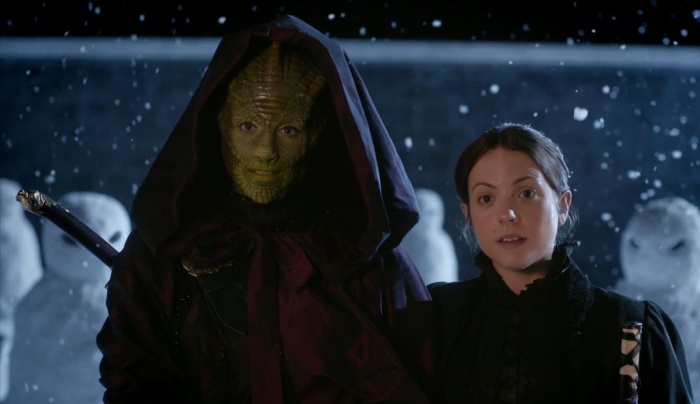 |
| Like Jane Eyre, modern-day entertainment still pokes fun at the strict social norms that were held in Victorian society. |
The Victorian era was a great time to be alive. If you were a wealthy man, that is. Between an awesome social hierarchy, great working conditions, and some top-notch gender roles, there were plenty of social problems that remained unaddressed in Victorian England. Miss Temple allows the girl small comforts, such as the occasional bread with butter or clean tucker. In this way, Miss Temple is representative of an alternative to the strict gender roles and crushing social norms of Victorian society. Without directly calling out any actions or norms as being negative to society, Bronte allows the reader to find that these rules are harsh and antiquated through this interaction between Brocklehurst and Temple.

I was happy to see that you acknowledge the historical and social context of the excerpt- we often read something with our own perspective in mind and overlook an author's true purpose.
ReplyDeleteWe see that Brocklehurst is using religion to excuse his behavior towards the children and thus forcing his own beliefs upon them.